
Laser Protection Helmet Factory: Crafting Safety for High-Tech Environments
2026-05-31
In the heart of advanced manufacturing and research, where lasers sculpt the future, a critical question arises: who safeguards those who wield this light? Enter LASERPAIR, a name that quietly redefines protection. This isn't just about helmets—it's about precision-crafted shields born in a factory where innovation meets unwavering commitment to human safety. Curious how a single facility is shaping the resilience of high-tech environments? Step inside.
Precision Engineering for Unyielding Protection
Every curve, seam, and layer is shaped with deliberate intent, transforming raw materials into a shield that embraces both form and function. We refine tolerances down to the micron, ensuring that each component interlocks seamlessly, leaving no room for vulnerability.
Our design philosophy rejects the ordinary—edges are chamfered to deflect impact, surfaces are treated to resist wear long after others have failed. It’s the kind of meticulous craft that doesn’t announce itself but quietly earns trust under the harshest conditions.
From the molecular bonding of composites to the ergonomic weighting of a grip, nothing is left to chance. This is protection engineered not as an accessory, but as an extension of instinct—uncompromising, absolute, and built without shortcuts.
From High-Tech Labs to the Factory Floor
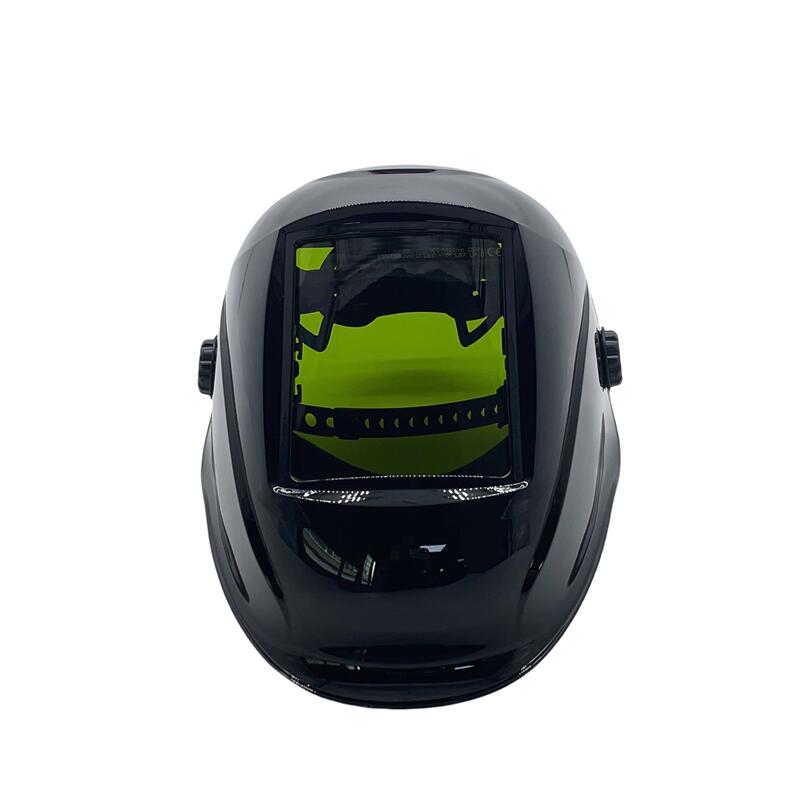
The journey from a controlled lab environment to a noisy factory floor is rarely a straight line. It demands a shift in mindset from proving a concept to producing at scale.
Real-world conditions introduce variables that lab benches can't replicate—vibration, temperature swings, dust, and operator variability. What works beautifully in simulation often stumbles when confronted with the chaos of an active production line.
Successful translation hinges on early collaboration between researchers and manufacturing teams. When engineers from both sides sit together during the design phase, they can anticipate production hurdles and embed solutions directly into the design, slashing time-to-market and avoiding costly late-stage redesigns.
Innovative Materials Shielding Modern Vision
A quiet revolution is unfolding in the way we protect our eyes‐not through thicker lenses or darker tints, but through materials that work almost invisibly. New classes of polymers and thin-film coatings are being engineered at the molecular level to selectively filter aggressive light spectra while preserving natural color perception. Instead of simply blocking light, these materials use interference patterns and embedded nanostructures to redirect harmful wavelengths harmlessly away, leaving the crisp, true-to-life vision that modern life demands.
Beyond filtration, there’s a shift toward adaptive shielding that responds to the environment in real time. Photochromic compounds have evolved from slow, temperature-sensitive curiosities into fast-acting, precision-tuned layers that darken under specific types of glare, not just UV. Researchers are now embedding liquid crystal microdroplets into eyewear surfaces, allowing instant reconfiguration of transparency with an electric whisper. This means a single pair of lenses can transition seamlessly from the soft glow of a reading lamp to the harsh strobe of city traffic, cushioning the visual system against fatigue without the wearer ever noticing a change.
Tailored Safety Solutions for Any Wavelength
Every laser system operates with its own set of parameters—power, pulse duration, and wavelength all influence the level of risk. Off-the-shelf protective gear rarely accounts for these nuances, leaving either gaps in safety or unnecessary restrictions on usability. Our approach starts with a detailed analysis of your specific setup, mapping out the exact spectral range and operating conditions. This allows us to design optical filters and protective barriers that match your wavelength precisely, ensuring maximum protection without compromising visibility or workflow.
Standard solutions often force you to choose between broad‑spectrum attenuation and optical clarity, but your application deserves better. By engineering materials at the molecular level, we can tune absorption and reflection characteristics to target only the hazardous wavelengths while letting useful light pass through. The result is safety equipment that feels invisible in daily use—operators see clearly, instruments function normally, and your process remains efficient. Whether you’re working with UV excimers, visible band solid‑state systems, or near‑infrared fiber lasers, the solution adapts to the problem rather than the other way around.
Flexibility also means anticipating how your needs might evolve. We build scalability into every design, making subsequent adjustments quick and cost‑effective if you upgrade equipment or shift to new wavelength ranges. This future‑proof mindset eliminates the need to replace entire safety systems down the line. From small‑scale research environments to full production floors, tailored protection means treating each wavelength as a distinct challenge with its own engineering answer—not a checkbox on a generic specification sheet.
Rigorous Testing, Reliable Defense
Every product we ship endures a gauntlet of real-world simulations—drop tests, thermal shocks, and continuous stress cycles—long before it reaches your hands. We don’t just check boxes; we push hardware and software to their breaking points, then reinforce them. That way, when threats emerge, your defense isn't just theoretical. It’s battle-proven.
Our labs run 24/7, replicating attack vectors that most systems never face. From zero-day exploits to brute force intrusions, we measure response times in milliseconds and accuracy rates in decimals that matter. Each test iteration feeds directly into our engineering loop, shrinking vulnerabilities before they can be exploited. Because for us, a single breach in testing is a blueprint for hardening.
This obsession with stress-testing translates into a defense layer that adapts on its own. When your infrastructure is under fire, our platforms don’t just sound alarms—they isolate, remediate, and report, all while keeping you operational. The result is a quiet confidence: not that attacks won't come, but that your systems will stand when they do.
Where Craftsmanship Meets Cutting-Edge Science
In the quiet hum of the workshop, tradition and technology don’t just coexist—they converse. Every piece begins with a deep respect for time‑honored techniques: the steady hand that guides a chisel, the patience to let materials speak before a single cut is made. But this isn’t a museum of old methods. Here, the artisan’s instinct is sharpened by data, from molecular‑level analysis of finishes to stress‑pattern algorithms that predict how a joint will age. The result isn’t a sterile, machine‑made product, but something warmer—a creation where human judgement is elevated by precision, not replaced by it.
Take the way we approach colour. For centuries, dyers relied on inherited recipes and a seasoned eye for the moment a vat turned just the right shade. Today, spectrophotometers dissect that exact hue into spectral fingerprints, ensuring consistency across batches while still leaving room for the subtle variations that give natural materials their soul. It’s a delicate balance: the science guards against fading and flaw, while the craftsperson’s irreplaceable feel decides the final tone. The same applies to our metalwork—laser scanning catches micro‑imperfections invisible to the naked eye, but only a master polisher knows when the surface has reached that elusive, almost liquid gleam.
This fusion also redefines longevity. We embed passive sensors within hand‑stitched seams, not to turn objects into gadgets, but to offer their owners a whisper of insight—a gentle alert when humidity threatens an heirloom textile, or a record of a chair’s subtle shifts across decades. By pairing ancestral wisdom with advanced material science, we build things that evolve with their environments, growing more personal with age. The true magic happens when the two lenses—the maker’s tacit knowledge and the scientist’s empirical rigour—merge into a single way of seeing. You sense it the moment you touch a finished piece: absolute solidity, yet somehow alive.
FAQ
Our helmet integrates multi-layer optical filters and a reflective coating that specifically target the high-intensity wavelengths common in laser labs and advanced manufacturing. The design prioritizes peripheral vision without sacrificing beam attenuation, and the lightweight shell is built from impact-resistant polymers that won't outgas in cleanroom settings—a detail often overlooked in generic safety gear.
We maintain an in-house testing lab equipped with calibrated laser sources and spectrophotometers. Every batch undergoes a real-beam attenuation test, not just a theoretical calculation. Our certification process aligns with ANSI Z136 and EN 207, but we go further by simulating prolonged exposure to check for material fatigue, something that standard audits might miss.
Absolutely. We offer tint adjustments for specific wavelength ranges, interchangeable side shields for added splash protection, and headband systems compatible with cleanroom hoods. For research facilities, we even provide anti-fog coatings that hold up after repeated autoclaving. The trick is balancing protection levels with user comfort, and our engineering team works directly with clients to nail that balance.
The visor uses a composite of polycarbonate infused with rare-earth absorbers and dielectric layers that reflect rather than simply block light. This prevents heat buildup that could deform lesser plastics. The frame is a nickel-free alloy with a thermoplastic overmold, chosen for biocompatibility in rare cases of skin contact during extended shifts.
We keep a buffer stock of core components to handle surges, but for large-scale orders we schedule phased deliveries to match project milestones. Lead times are honestly discussed upfront—no empty promises. Our logistics team coordinates with specialty carriers to maintain product integrity, as some materials are sensitive to temperature swings during transit.
Beyond the typical warranty, we offer on-site inspection services for clients with large fleets. We also run a recycling program for end-of-life visors, recovering the rare earth elements. Training sessions cover proper donning, inspection routines, and the subtle signs of coating degradation that field users might miss. It’s about extending product life through education.
Conclusion
At the heart of every laser protection helmet lies a marriage of meticulous engineering and material science. This factory transforms laboratory breakthroughs into wearable armor, shielding vision in environments where light itself becomes a hazard. Each helmet is forged through precision processes that account for the specific wavelengths encountered in semiconductor cleanrooms, medical laser suites, or advanced manufacturing lines. Rather than offering generic eye protection, the approach here is deeply customized—whether absorbing ultraviolet, filtering near-infrared, or blocking multiple laser bands simultaneously. Advanced polymers, specialized coatings, and composite layers are selected not only for optical density but also for comfort, weight, and long-term durability under demanding use.
Translating these material innovations into reliable headgear demands rigorous validation. Every helmet faces a battery of tests that simulate real-world exposure: pulsed beams, continuous wave lasers, and even off-axis strikes are recreated to ensure no weak points remain. The factory’s testing regimen goes beyond compliance standards, pushing products until they fail to map absolute thresholds of defense. This rigor is guided by a team where seasoned craftspeople collaborate with optical physicists, blending hand-finished assembly with computer-modeled impact resilience. The result is protection that feels intuitive—a seamless fusion of artisan care and exacting science, crafted for those who work at light's edge.
Contact Us
Contact Person: Jenny
Email: [email protected]
Tel/WhatsApp: +86 13537713281
Website: https://www.laserpair-safety.com/