
Laser Protection Helmet Supplier – Essential Tips for Finding Quality Safety Gear
2026-07-16
Finding a reliable laser protection helmet supplier isn't just about checking boxes—it's about ensuring your safety in high-risk environments. With countless options flooding the market, how do you separate genuine protection from clever marketing? This guide cuts through the noise, revealing what truly matters when choosing protective gear. And if you're tired of second-guessing your choices, LASERPAIR might just redefine your expectations. Ready to uncover the secrets to smarter safety investments?
Know Your Wavelengths: Matching Helmets to Laser Types
Laser safety isn’t one-size-fits-all. The invisible light from a CO2 engraver behaves very differently than the pulsing beam of a handheld welding rig, and your protective gear needs to reflect that. A helmet rated for a specific wavelength range may be completely transparent to others—leaving you exposed without ever realizing it. Matching your helmet’s optical density and lens tint to the exact laser type you work with is the first real step toward genuine protection.
When you’re dealing with near-infrared diodes or fiber lasers, you’re often facing stray reflections more than direct hits, which means peripheral coverage and filter transitions matter just as much as the shade number. A wraparound design with a snug facial seal can stop side-angle exposure that flat-glass goggles miss entirely. Meanwhile, for longer IR wavelengths like those from CO2 tubes, polycarbonate lenses with the right coating can provide full-blocking capability without punishing weight or cost.
Switching between multiple laser types in a shared workspace? Don’t gamble with a single ‘general-purpose’ lens. Hybrid systems demand either a switchable filter assembly or helmets engineered with broadband attenuation that doesn’t sacrifice visible light transmission entirely. The goal isn’t darkness—it’s precision filtering that keeps your situational awareness intact while ruthlessly stripping away the specific frequencies that pose a threat.
Beyond the Shell: What Makes a Helmet Truly Protective?
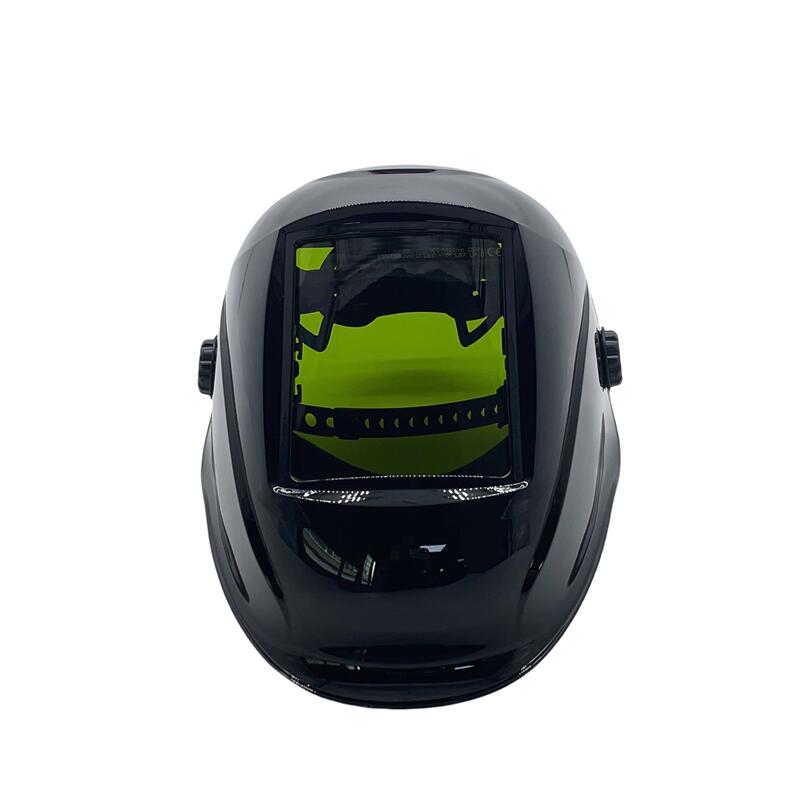
A helmet's outer shell is just the first line of defense—it’s what’s underneath that truly absorbs impact. The expanded polystyrene (EPS) liner crushes on impact, dissipating force before it reaches your head. Modern designs often integrate multi-density foam or technologies like MIPS, which allows a low-friction layer between shell and liner to slide slightly upon angled impact, reducing rotational forces linked to brain injury.
Protection also hinges on how the helmet fits and stays in place. A secure, snug fit ensures the energy-absorbing materials align with your head during a crash, while a loose or poorly adjusted helmet can slide off or transfer force unevenly. Ventilation, strap design, and retention systems work together not just for comfort but to keep the helmet positioned correctly when it matters most.
Supplier Credentials That Actually Matter
Anyone can print a certificate or slap a logo on their website. What sets serious suppliers apart is evidence you can verify — like third-party audit results, on-time delivery data over the last 12 months, or genuine customer testimonials from companies that aren't afraid to go on record. These signals cost real effort to earn and are much harder to fake.
Look beyond the badges. A supplier that invests in keeping machinery calibrated, trains line workers on defect prevention, and can show you their corrective action logs is worth ten who only talk about their ISO number. Credentials that reflect actual process discipline — things like live quality dashboards or shared visibility into production schedules — tell you they have nothing to hide.
Finally, the credentials that truly matter are the ones that align with your own challenges. If you're dealing with complex logistics, a supplier's proven track record with customs documentation and incoterms matters more than any generic award. If consistency is your pain point, ask for batch-level conformity data, not just a PDF. Real credentials answer the question 'Will you make my life easier?' without making you ask twice.
Comfort Isn’t Optional: Fit and Long-Wear Design
We started with the belief that a truly exceptional garment should never ask you to choose between style and comfort. The fit is engineered to mimic the natural lines of the body, providing a tailored look without any of the pulling, gaping, or restriction that can come from overly rigid construction. Every seam, every dart, and every hem is placed with intention—resulting in a silhouette that moves with you, not against you. You’ll notice it the moment you slip it on: a sense of ease that feels almost bespoke, yet is built right into the ready-to-wear design.
But comfort extends far beyond the initial feel. We’ve concentrated heavily on how the garment behaves over hours of wear. The fabrics are chosen not just for their softness at first touch, but for their ability to maintain that softness and shape through a full day of meetings, errands, or travel. Strategic reinforcement at stress points means the knees, elbows, and seat won’t bag out by midday. The result is a piece that looks as crisp and intentional at 6 p.m. as it did when you buttoned it up at 8 a.m.
We think about comfort as a kind of quiet confidence. When you’re not distracted by an itchy tag, a waistband that digs, or fabric that feels clammy, you’re free to focus on the moment. That’s why we sweat the smallest details: flat seams that lie smooth against the skin, breathable linings that regulate temperature, and enough stretch to let you reach, twist, and laugh without a second thought. This isn’t about adding a ‘comfort feature’ to a standard design—it’s about rethinking the whole garment from the inside out, so that every aspect contributes to ease, hour after hour.
The Real Cost of Cutting Corners on Laser Safety
When a facility delays replacing a worn laser curtain or skips a routine interlock check, the immediate savings might feel like a win for the budget. But what managers often overlook is how quickly a single incident can eclipse those marginal gains. A direct hit to an operator’s eye doesn’t just halt production; it triggers a cascade of expenses—emergency medical care, regulatory fines, increased insurance premiums, and the downtime that ripples through delivery schedules. And that’s before the less visible costs kick in: the blow to workforce morale, the hours lost to investigations and retraining, and the quiet erosion of trust from clients who hear about the mishap.
There’s a common assumption that safety shortcuts only hurt in catastrophic moments, but the reality is far stealthier. Inadequate shielding leads to gradual sensor degradation, inconsistent power output, and subtle alignment drift—problems that manifest as product defects, wasted materials, and endless recalibration cycles. These nuisances rarely get linked back to safety compromises because they look like routine maintenance issues. Yet the cumulative impact drains engineering resources and dulls a company’s competitive edge, all while the root cause goes unnoticed. Eventually, a design team might spend weeks troubleshooting a precision problem, never realizing their laser enclosure was the subtle culprit all along.
Beyond the balance sheet, cutting corners reshapes organizational culture in ways no policy memo can undo. When workers see bypassed interlocks or protective panels left ajar, they internalize a message that performance metrics matter more than their well-being. This breeds exactly the kind of risk tolerance that precedes serious accidents—employees stop reporting near-misses because “that’s just how we do things here.” The real cost isn’t a line item; it’s a slow, corrosive shift toward normalizing danger. Once that mindset takes hold, bringing it back demands far more investment than the safety upgrades that were deferred in the first place.
Support After the Sale: Warranties and Emergency Replacements
True support doesn’t end once a product ships. That’s why we back every purchase with straightforward warranty coverage that actually works when you need it. No fine print runarounds or endless hold music—just clear terms handled by people who genuinely want to help. Whether it’s a manufacturing defect or a part that wore out sooner than expected, our team focuses on getting you a solution, not on finding reasons to say no.
Sometimes waiting isn’t an option. For critical situations, our emergency replacement service means you’re not left stranded. We keep buffer stock of key components and can dispatch a replacement with minimal turnaround—often by the next business day. The process is intentionally simple: one call, a quick verification, and the replacement is on its way. It’s the kind of backup you hope you never need, but you’ll be glad it’s there.
What sets this apart is that we treat warranty and emergency support as part of the product experience, not an afterthought. Our service records show that most claims are resolved in under 48 hours, and emergency replacements arrive when promised. That reliability doesn’t come from scripts or policies alone—it comes from a team encouraged to think on their feet and do right by the customer. When something goes wrong, you deal with people who can actually make decisions, not just read a screen.
FAQ
A laser protection helmet shields your entire head, face, and often the neck from harmful laser radiation—something goggles alone can't fully achieve. It's crucial in high-power environments where scattered or reflected beams could hit exposed skin or eyes from odd angles, and it also offers impact protection for your skull.
Look for clear markings that indicate compliance with standards like EN 207 or ANSI Z136. A trustworthy supplier will gladly share test reports from accredited labs and detail the optical density and wavelength coverage. If they hesitate or only offer vague assurances, consider that a red flag.
Focus on the optical density (OD) values at the specific wavelengths you work with, the visible light transmission (VLT)—you need to see what you're doing—and the helmet’s fit and comfort. A helmet that slips or fogs up dangerously compromises safety, no matter how good its specs look on paper.
Materials make a huge difference. Polycarbonate shells with specialized absorptive or reflective coatings are common, but the quality varies. Some filters degrade faster under UV exposure, and cheap hinges or visors can fail when hit. A reputable supplier will explain why their materials last longer and maintain consistent protection.
Many good suppliers offer customization—not just for fit, but also for prescription lenses, communication gear integration, or unique wavelength requirements. It usually involves a consultation to map your needs, so you get a helmet that works with your workflow instead of fighting it all day.
Peripheral vision and anti-fog performance. A helmet with great OD numbers can still be a nightmare if the viewing area is too narrow or it mists up in seconds. Also, check how easily you can replace the visor or filters—some designs force you to buy a whole new unit when the coating wears out.
Ask them about their quality control process and what happens if a batch fails testing. A supplier with integrity will walk you through their factory audits, material sourcing, and ongoing aging tests. They’ll also be honest about lead times and limitations instead of promising impossible delivery dates.
Clean it with the manufacturer’s recommended solutions—never harsh chemicals that can eat away protective coatings. Inspect regularly for scratches, cracks, or discoloration, and replace the filter when its OD degrades, not just when it looks bad. Also, store it away from direct sunlight and extreme temperatures to preserve the materials.
Conclusion
Finding a reliable laser protection helmet supplier means looking past flashy marketing and focusing on the details that genuinely keep users safe. It starts with wavelength compatibility: a helmet that blocks 1064 nm won't help against a 532 nm laser, so matching the protection range to your specific laser type is non-negotiable. But a helmet is more than its outer shell—internal padding, edge seals, and lens coatings all play a role in preventing scatter and accidental exposure. When vetting suppliers, verify their certifications and request third-party test reports; a legitimate provider won't hesitate to share compliance data for standards like EN 207 or ANSI Z136.
Comfort often determines whether a helmet gets worn consistently, so prioritize adjustable fit systems, lightweight materials, and designs that accommodate extended use without causing fatigue. Cutting corners on laser safety carries hidden costs far beyond the initial price tag—a poorly manufactured helmet can fail instantly under beam impact, leading to irreversible eye damage. That's why a supplier's commitment should extend past the purchase: look for clear warranty terms, responsive customer support, and swift emergency replacement programs. In an industry where protection can't be approximate, pairing technical knowledge with a trustworthy partner ensures that safety gear performs when it matters most.
Contact Us
Contact Person: Jenny
Email: [email protected]
Tel/WhatsApp: +86 13537713281
Website: https://www.laserpair-safety.com/